
Freedom of expression in Morocco currently faces significant restrictions, with increasing pressure from authorities on media and digital spaces. Reports indicate that journalists and activists are frequently prosecuted, with the criminal code used against them instead of the 2016 Press Law. Authorities often charge individuals with offenses like espionage or moral crimes, which has led to widespread self-censorship among journalists and limited their criticism of the state.
In the 2024 World Press Freedom Index, Morocco ranked 129th out of 180 countries, reflecting its low level of freedom. This decline has eroded trust in traditional media, leading to a widespread reliance on social media as a primary platform for news and government criticism, despite the risks of arrest. Activists and bloggers face real challenges in expressing their views without legal repercussions, causing some to seek asylum abroad for protection.
Shot24 interviewed a number of Moroccan activists who decided to leave the country for other countries, seeking political asylum in their host countries, claiming that the country is witnessing a decline in freedoms, especially freedom of opinion and expression.
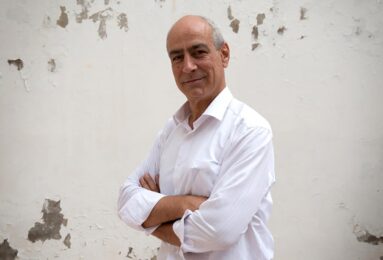
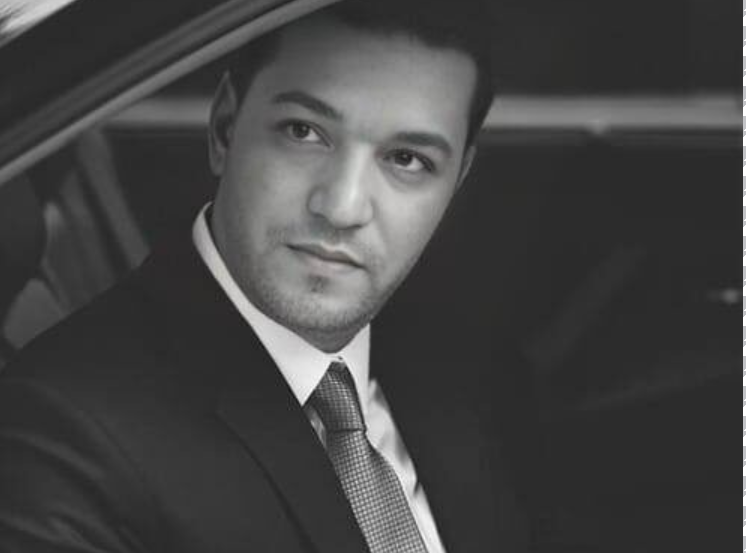
In this interview, we host blogger Mohamed Kandil, a blogger and political activist who left Morocco for Norway, then Iceland, with his family, requesting international protection on the grounds of torture and detention.
Transcript of the interview
1. Who is Mohamed Kandil?
Mohamed Kandil is a political activist and social media blogger, a former sympathetic member of the Justice and Development Party (PJD) since the mid-1990s, married with four children.
After a few years, I left the political work boat, and I no longer believe in party work in the Moroccan context. This change in terms of participating in political life occurred after I was harassed by the Moroccan intelligence services in the province of Settat in the context of my criticism of the royal institution.
2. Tell us about the process you went through to get to Iceland.
When I felt that I was being targeted by the Moroccan authorities, a well-informed friend told me that Moroccan political security had put me under surveillance because of my digital interviews with Tahdhiya TV in which we addressed a range of issues concerning Morocco and foreign affairs in a critical manner.
At the time, the context was characterized by a severe repression of freedom of opinion, notably through the arrest of hundreds of bloggers and dozens of journalists, and reports of torture and ill-treatment inside prisons and police stations. I made the decision to leave with my family, applied to the consular authorities for a tourist visa with my family in August 2023, and after fulfilling all the required documents and conditions, the visa was granted.
3. How did the idea of leaving Morocco come about?
It came in the context of a comprehensive survey of the public sphere in Morocco, where I found that there were risks of arrest, torture, and persecution.
It was in August 2023, and inside Mohammed V Airport, I was subjected to a barrage of questions by a security official for about 20 minutes, after which suspicious movements of plainclothes security personnel began while I was waiting for my flight, which was at 01:15 a.m. If it wasn’t for God’s kindness, I would have been arrested.
4. Did you apply when you arrived in Iceland?
Yes, as soon as I arrived, I applied for international protection at the Immigration Service.
What goals do you intend to achieve while on Icelandic soil if your application is accepted?
What I intend to achieve is to study journalism, this is a long-awaited dream of mine, along with a job that preserves my dignity and the dignity of my children away from anyone’s support, as I was never born to be dependent.
5. You participated in a number of protests in your city. How do you view your activism in Morocco?
The issue of activism was limited to the short period I spent as a sympathizer and supporter of the Justice and Development Party, without forgetting some militant stands and marches with my comrades in the Socialist Union Party Ibn Ahmed branch. I was active through videos and blog posts criticizing the government.
In fact, I now view these efforts to participate in political and activist life with suspicion, as I believe they are often framed by security and intelligence services in the context of the royal palace’s attempts to embellish its image in front of the international community.
6. Have you been harassed by the Moroccan authorities?
Yes, I was harassed by the Mukhabarat in the second half of the 1990s, and again I was harassed by the Mukhabarat in the summer of 2023 because of my anti-regime positions and my stance on the Western Sahara conflict, through my posts on social media.
7. What is your position on the Western Sahara conflict?
I am one of the few who have spoken out against the occupation of Western Sahara through my posts. Because this occupation, which has been prolonged for 50 years, has come at a high cost to the Moroccan people. I mean that the budgets of education, health and human development have been depleted in order to digest the right of the Sahrawi people to self-determination.
8. What is your position on the monarchy in Morocco?
After the death of King Hassan II, I realized that those who rule Morocco and Moroccans are like mafias, not a state based on the rule of law and the principle of separation of powers, so we cannot say the monarchy as much as it is, in its current working methodology, a mafia, and we have to deal with it and all its symbols on this basis.
9. How do you view Morocco now?
After my escape from Morocco, so to speak, I see that the country is moving at an insane speed towards an abysmal slope that will not survive, and I call for curbing the tyranny of the regime so that the calamity does not occur, and I ask the general public to take to the streets and declare demands for democracy and even for the expulsion of tyranny from Morocco, otherwise I consider it only cosmetic.
10. What is your perspective on the current human rights environment in Morocco?
I expect that we will witness more harassment of freedom of opinion and press. More abductions, torture and extrajudicial detention, in addition to sham trials and muzzling.
The recent release of some journalists and bloggers came as a result of external pressure, and never as a result of a review by the repressive Makhzen regime
11. Would you consider returning to Morocco in the future?
No return to Morocco
12. What are your conditions for a return?
Overthrowing the current regime